Post-2000 Memories Shared

Updated: 9 March 2022

Here are additional memories of our IU days in response to Larry Clunie's appeal in 2022 (and some from a few years earlier).
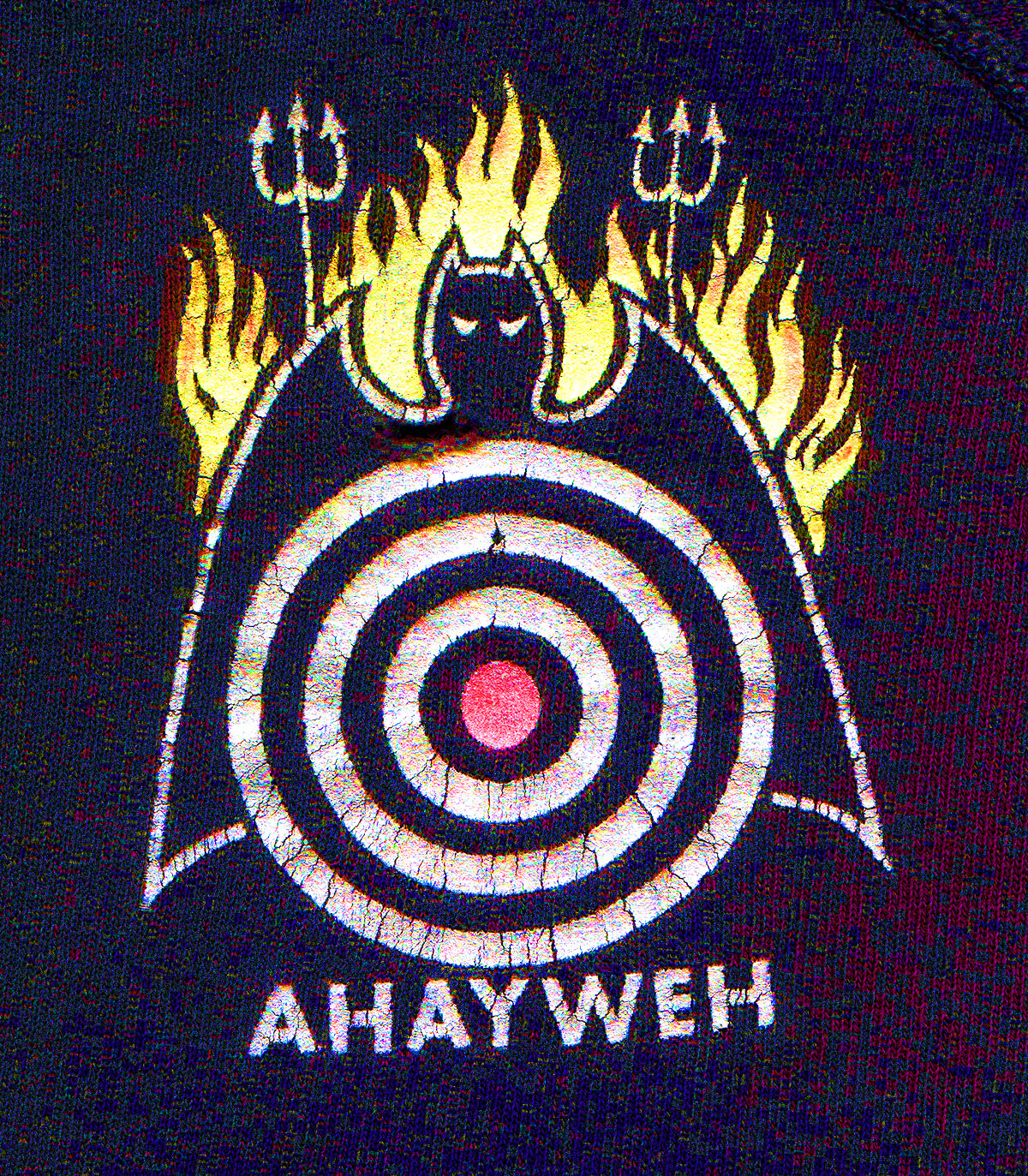
FROM LARRY CLUNIE: I've asked a couple of other older Ahaywehs about some of the traditions we inherited and found answers to some but not others. I think those traditions lasted to 1970 or so but not beyond. I visited the unit around 1990 and met 4 or 5 Residence Scholars, but when I mentioned the word Ahayweh, I got only blank stares. One of the guys was from Chicago and another was considering joining a fraternity, so I could tell times had changed.

In some way I don't remember, I was introduced to John Robert McFarland, who was in the program from about 1954 to 1958. He is from Oakland City, was a minister, and not too long ago moved to Bloomington. He came to one of our annual reunions at Nick's, but said it was too noisy and he couldn't hear. He will occasionally contribute an email and is very entertaining and has some funny stories. I think he told Loren Henry about our group. John's roommate was Tom Cone, who became an attorney in Greenfield. John may have told me that Tom originated the name Ahayweh, so I called to ask him. He said he thought up the name in 1957 or 1958 and also the Ahayweh Cheer- "Coca Cola, pig's asshola, etc." He did not remember the devil's head and rings logo, nor did he know the Fight Song ("We're Captain Frank's Ahaywehs, We're swabbies of the urn...") I think Loren said he remembered an unpopular R.A. named Frank something. The rest of the song is just some lines from a Doug Clark and the Hot Nuts song, but I think someone deserves credit for the phrase "swabbies of the urn." Some of the guys said they would sing the song on the way back from intramural games, but I only remember hearing it at a few dorm meetings. All of these traditions were intact when I joined the program in 1964 and were carried on through at least 1968. If you can add anything to this, please let me know.

We had a guy from the IU Archives come to one of our reunions several years ago. He knew a lot about Trees Center and he accepted for the archives a Linden Hall sign that Dick Cook rescued before the building was demolished and also my short-sleeved Ahayweh sweatshirt. We have a website with information about our years on the program with lots of names, photos, and stories that we might donate in some way, but I'm not sure how interested anyone outside the group will be in it in the future. We also have a brick in front of Nick's.

If there is anything you can think of to add- especially about the logo and the Fight Song, please let me know.

FROM JOHN McFARLAND: HOW THE AHAYWEH NAME CAME ABOUT

[You can skip the self-indulgent early part of this memoir and go directly to the Ahayweh naming section at paragraph 16.]

I have written some of my Ahayweh reminiscences before, but my Ahayweh history is like my SS # or my phone #; I have to start at the beginning or I can't get it right.

I came to IU in the fall of 1955. I think that was the 2nd year of The Plan, perhaps the third. Bob Hammel was on The Plan the year before, his one year as a student at IU. We met each other about 40 years later and became fast friends. Little did we know back in ’55 that we were forfeiting 40 years of friendship by missing each other by only 3 months.

I had dropped out of Oakland City High school in my senior year, when I turned 18, because the Potter & Brumfield factory in Princeton would hire you at 18, whether you knew trig or not. My family needed the $1.04 per hour. I figured that factory work was now my life.

In mid-July, I ran into classmate Jim Shaw on Main Street in OC. He was at loose ends and said, "Let's drive up to IU and see if they'll let us in." It sounded like something to do. I was on night shift, so we just jumped in the car and drove the 90 miles.

I have no idea how we found the admissions office, but we did. In those days, any grad of an Indiana high school was automatically admitted. They got the idea that I was a grad. Perhaps it was something I said.

They asked, "How are you going to pay?" I gave my answer to everything: "I'll get a job." They said, "Have we got a deal for you. We’ve put all the hopeless and bedraggled boys like you into the east wing of a left-over fire trap named Linden Hall, where you can study all the time, and work as a galley slave some place on campus, and clean your own toilets, and sleep on bare mattresses, since you'll not have enough money to buy sheets. It’s called The Residence Scholarship Plan."

That sounded good to me, at least better than sitting all night in a metal building, where the temperature and the humidity were both 90, staring into a blinding light at an electrical relay while trying to get twelve tiny needle points on four different levels to all seat at the same time.

The first semester I almost flunked out, which meant that I got 4 hours of A and 6 of B and 5 of C. I was under a B average! It was terribly embarrassing. I think I was the only guy in my class, probably the whole of Linden East, who had failed so miserably. I had not realized that in college you could not get by on being the nice boy that teachers didn't want to flunk because he was poor.

The older guys loved to brag about how we were no longer allowed to compete for the Scholastic Cup, awarded to the housing unit with the best overall GPA, because we won it all the time, handily. I alone was going to ruin our reputation. The older guys, like the Thorson brothers, looked at me with disdain whenever they encountered me in the shower room, so sparkling clean from spending too much time scrubbing when I should have been studying.

{In those days, you were docked an hour [half-hour?] of credit if you missed a class on the day before or after a vacation. Tom and Pete Thorson lived in South Bend and so always left early. Since they always took 18-20 hours every semester, and got no grade below A, their GPAs were above perfect.}

Normally my plight would not have been ameliorated by rooming with C. Thomas Cone. He didn't say that he was the smartest man in the world, but it was implied. In any contest of wits between the two of us, I always came in last. Coming in a distant second all the time was not good for the intellectual ego.

But he pitied my poor intellectual estate, and pulled me under the mantle of his own brilliance. He explained to everyone that a tractor had fallen out of the hay loft onto my head, [Tom did not know a lot about farming] so that a 1.9 GPA [We were on a 3.0 scale then rather than 4.0] was actually pretty good for someone with a head injury

{The neat thing about a 3.0 scale was that we knew guys in other dorms whose GPA actually started with a minus.}

The housing office must have put Tom and me together just because neither of us smoked. We had nothing else in common. He was a big city boy, a grad of Indianapolis Tech. I was a welfare farm boy from a little school. He was brilliant, while if I had lived in Lake Wobegon, I would have been above average. Especially when, after our frosh year, I realized I would have to be a preacher--because of a deal I had made with God, when I was 14, to save my sister’s life-- he knew that I would be miserable the rest of my life, and so assumed he would have to be kind to me the rest of my life to make up for the way I would be treated and paid [not] by the church. [Tom had faith in general but not much of it was in the church.]

I have done weddings for all his children. He is still my best friend.

[16] Tom was a Latin scholar. Indeed, in our orientation week he set the Latin test record for . . . why in the world would you be taking a Latin test in orientation week? I suppose it was to get Latin credit--he was pre-law--without taking the class. Anyway, he set the record.

So it was no surprise that, while reading Dante in Latin [Yeah, I know that the phrase is in English, but work with me here.] Tom named us, we Linden East denizens of The Plan . . . Ahaywehs!

So let it be known!
Attested to by John Robert McFarland, Ahayweh 1955-59. AB History.

FROM STEVEN T. BURRESS: In 1964-65, tuition was $11 per credit hour. Residence scholar room and board was $480 per year or $62 per month for 8 months. Other students' room and board varied depending on where they lived, but the cheapest was MRC at $720.

FROM LOREN HENRY: My brother Donald (Don), Ahayweh '55-'57, brought me to campus for Fall'57. Tuition was $7/credit hour. I had a fee remission scholardship which paid either 3/7 or 4/7 per credit hour (I can't remember which). Using 3/7, I paid $60 tuition for 15 credit hours. I had $150 in my pocket. My dad was unemployed as Dupont closed the munitions factory in Charlestown due to the winding down of the Korean War. As an aside, much of that land is now Charlestown State Park. I had enough left of that $150 to enroll and buy books. As a Residence Scholar, I worked in the dining hall at Wright Quad which was all male. Those thousand guys would cheer if any of the student workers made a mistake. Pay was $0.90/hour and if you were neither late nor skipped work for a set number of times, you could earn an extra $0.10/hour at the end of the semester. You can bet your bottom dollar that I ALWAYS got that extra $0.10/hour. I think room and board (no meal on Sunday evening) was $468/year for Residence Scholars in Linden East and Pine. The other units paid about $668 as I recall.

FROM ASHLEY HASTINGS: It was $7 per credit hour when I started in 1960. My first job was in the dining hall dish room at Tower (later Teter) Quadrangle, at 90 cents an hour. I think I got a 10-cent raise every semester, or at least every year, with a good work record. Like many others, I couldn’t have afforded college without the Resident Scholarship plus a National Merit Scholarship that paid the handsome sum of $275 per semester. I don’t remember the exact amount for room and board, but with the scholarship I don’t think it came to more than $250 per semester; I paid most of it from my Merit money. I eventually earned a PhD in Linguistics, also from IU, and that was my ticket to academic jobs in Wisconsin, Texas, and Virginia, some interesting travel around the US and abroad, and a little language testing business I ran for a few years after retiring.

As for boreasses, I remember several, but I don’t want to ruin whatever reputation I have so I’ll keep them to myself.

FROM RODGER SMITH: Seems like I paid $9 per hour when I started in ‘65. Room and board was about $600 per year at half price. Working in the dining hall at Read (working in a girls dorm at breakfast was no perk!) was maybe $1.10 per hour but when I switched to the Residence Hall Library System it was a big increase to maybe $1.25. Like many others I wouldn’t have made it financially without the Ahayweh program. Eventually I earned a doctorate in education and spent most of my career as a superintendent of schools. Without the Resident Scholar program I probably would have been laid off from Inland Steel when it closed shop and spent the rest of my working life in odd jobs. One of the best perks of the Ahaywehs was the great companions. To this day my two best friends were Resident Scholars.

FROM JOHN McFARLAND: When I matriculated in the fall of 1955, we [all students] paid $4.25 per credit hour. I made 50 cents per hour working in the Rogers Center cafeteria, mostly as a busboy, so it took almost 9 hours of work to pay for an hour of tuition. I can't remember specifically what room and board cost, but I know I spent $1,038 from the day I stepped on campus in the fall to when I left in the spring. [I had one of those little blue budget books in which I recorded every expense.]

FROM ROBERT HEDINGER: I paid $7 a credit hour. I don't remember the room and board rate, but it was half the regular rate and we were offered a job that would cover the other half. There was no way I could have gone to college without this scholarship. My backup plan was to join the navy and use that as a way of getting an education. This allowed me to eventually get a PhD in physics and get a job at Bell Laboratories designing satellites and eventually becoming an executive vice president of Loral Skynet, a satellite operating company. Also I represented the United States to the United nations in negotiating radio frequency sharing rules for international satellite operators.

FROM LARRY CLUNIE: My loyalty to IU is mainly to the Residence Scholarship program that the university provided and to the friends I made in that group. We were the "smart poor boys" or, as Rodger Smith said, "a like-minded bunch of misfits". I consider that I was a bit of a misfit in high school. I cared about my grades and the other guys seemed to care mostly about cars, about which I cared little. The Ahaywehs, as we called ourselves, cared and boreassed about what seemed like more important things, although I don't remember what they were. Boreass was an IU term that meant either an "intellectual" discussion or a trick played on a colleague. I entered the program in the fall of 1964 and graduated in 1968, although because my freshman grades were too low, I was off the program my sophomore year. I raised my grades and was back on the next two years.

Gary Wiggins found the minutes from the 1951 IU Board of Trustees meeting establishing the Residence Scholarship program. It clearly stated that it was for Indiana residents, male and female, who had both good grades and financial need. Many of my friends say that their families had no college experience and could provide them with little financial help and that without the program, they might well have ended up spending their lives working in steel mills or auto plants, having to take out large loans, or having to change their plans in some other ways. Some of us had had few luxuries and limited experiences. Dave Jetmore said when he went to IU, he had never been to Bloomington and he was surprised by the high hills south of Martinsville and the roads that had been cut through rocks on the way.

Housing expense was about half what it was in other residence halls. Members of the program were required to do "dorm jobs" (supervised by a member chosen as "the Whip"- Rich "Flush it" Bolin, Mike "the F-word" Retherford, and Bud (or Walt) Wiseman), which included cleaning restrooms and hallways. There was no janitorial service, nor was there maid service. Generally members kept their rooms orderly, but Steve Burress told of one pair of roommates who pulled their sheets over their beds and left newspapers, filled ash trays, leftover pizza, etc. on them and then when they went to bed, dumped everything beside the bed and left it there. He said the smell outside was overwhelming and even worse if the door was open. In recent years the government has required that the university provide janitor and maid service. Members were required to work at least ten hours a week, usually in a dining hall or library to defray their expenses and to maintain a 2.8 GPA. I know that there was some flexibility with the grade requirement because I never reached 2.8, although I improved my grades after my freshman year. Although I don't remember meeting her, other Ahaywehs like Bill Dingee and Jack Sciara speak fondly of Alice Duncan, who administered the program and was always helpful when any of "her boys" went to her with a request- usually for money.

When I joined the program, there were several traditions unique to the unit. As I learned from John Robert McFarland, his roommate Tom Cone originated the nickname Ahaywehs for members of the unit in the late 1950's. Ahayweh is an acronym for a loose translation of Abandon Hope All Ye Who Enter Here, which is written on the gates of hell in Dante's Inferno. Mr. Cone verified this for me in a phone call and also said he originated the Ahayweh cheer, which is better left unrepeated. Likewise with the Ahayweh Fight Song, which must have been created sometime after Tom Cone (he didn't know it) and before 1964. It is a version of a song by Doug Clark and the Hot Nuts, a group which sang at college parties and appeared in leopard skin jock straps. They were not from IU and I never saw them. One other tradition was the Ahayweh logo, likewise originated sometime after Tom Cone and before 1964. It was the head of a devil beside three circles (circles of hell) worn on either a long- or short-sleeved black sweatshirt. Our replicas today are T-shirts, but T-shirts were only used for underwear in the 1960's. All of these traditions seem to have died out in the early 1970's.

The original residence for the program was Linden Hall in Trees Center, which stood where the School of Education is now. Trees Center was 8(?) residence buildings and Arbutus, a dining hall-lounge-library building. The buildings were army barracks bought for $1 and moved to IU from Grissom Air Force base after WWII. They seemed like tinder boxes at a time when smoking was allowed. Walls between rooms were not close to soundproof. I can still hear the echoes of Steve Burress and Wayne DeArmon laughing and V.R. Heflick singing Beatle songs in the uncarpeted hallways. I think it is correct to say they were IU's low rent district. If you lived there, you had no basis for being pretentious. Female residence scholars (they didn't call themselves Ahaywehs) lived in Pine Hall. In the late 50's, males live in East or West (?) Linden, in 1964 in Upper Linden. The dorms in Trees Center were closed after the fall of 1964 and we were moved to Shea Hall in Foster Quad (upper classmen and their roommates) or McNutt (mostly freshmen). One of the most memorable boreasses in Upper Linden was Richard Cook's putting silver nitrate in a bottle of after shave in J.C. Harl's room. J.C. put it on before walking across campus to an athletic event on a sunny day. I was told the chemical reacted to sunlight by turning black. I only remember J.C.'s face being a little discolored later, but he said he had shaved about 20 times by then. And the there was Scott Lyons's "one-man panty raid".

Briscoe Quad opened in the fall of 1965, The residence scholars were on the 6th and 7th floors (I was on the 5th floor but spent a lot of time on the 7th floor. It seemed like the doors on the 5th floor were usually closed and there was little activity. Upstairs there was always something going on.) The first year both floors had all residence scholars- approximately 80 guys. The next year the 6th floor had all Ahaywehs but 3 or 4 rooms on the 7th floor were non-residence scholars. The 3rd year there was one floor only and only four freshmen on the program. The attrition rate was always fairly high, but it seemed that the university was unsure about the future of the program. It should be stated that the unit always had one of the highest GPA averages on campus. Our team (Richard Jarrell, Mike Thomson, Richard Day, and yours truly) won the Campus Quiz Bowl in 1967 and our friends celebrated by throwing us in the Jordan River. We collected beer cans, liquor bottles, and old suits for our annual Roaring 20's party in our lounge. In 1967, groups of us took road trips to Illinois, Michigan, and Michigan State to watch IU's Big Ten champion football team, and ten of us went in two cars on what Mike Yates called "The Great Ahayweh Road Trip" to the Rose Bowl. Boreasses ranged from placing open toothpaste tubes and ketchup packets partly under doors and then stomping on them, to throwing guys in filled tubs to celebrate birthdays, engagements, etc, to on one occasion completely emptying the room of a less than popular Ahayweh while he was gone for the weekend. There was Wally Johnson's idea for what to do when Rory O'Bryan became unengaged. Bill Dailey remembered Richard Cook, who was in ROTC, marching down the hall saying "Follow me boys" because Cook said that, if he went to Vietnam, because of the attrition rate for second lieutenants, he would only get to say it once.

In 1968, the program was moved to Moenkhaus in what had been GRC (Graduate Residence). I didn't live there but I know one of their proudest accomplishments was damming the mighty Jordan River.

Success is hard to measure, but most of us have had happy lives. Some of our success stories seem larger than others and bear mentioning. Tom Atkins was the first African-American to be student body President at IU; Bill Godfrey helped finance the business building that bears his name at 10th and Fee Lane; Bob Hedinger represented the US at United Nations conferences in Geneva on issues related to allocating and sharing frequency spectrum for global Satellite communication; Ben Allen was president of Northern Iowa University; Tom Pytynia was head of Eli Lilly's international legal division; Gary Wiggins earned a Ph.D. in Information Science and held numerous positions and received numerous awards at IU; Dave Jetmore, M.D., is Health Officer of Wayne County to deal with the 2020 pandemic; Ron Freeman- B.A.in German, M.A.in Comparative Literature, Ph.D. in Physiology and professor at the University of Missouri.

I've always considered the Ahaywehs the most interesting group I've ever been a part of. In 1987, I thought I might be able to organize a reunion of my former mates. I used an IU Redbook (student directory with home addresses), alumni resources, etc. to locate many of the guys I'd not seen in almost 20 years. I sent letters and received lots of replies (I still have the replies.) One of the more interesting replies was from a guy who said he'd lived the life of a straight man for 25 years and he was living the rest of it as a gay man. Gays were very much in the closet in our youth. We agreed to meet on July 4th at Nick's English Hut (where we later bought an Ahayweh brick) in Bloomington. The response was very good and we've continued to meet there ever since, at decreasing intervals until we now meet annually (This year was the first we've not met in a long time.) We have a core of about a dozen guys who come nearly every year and maybe still as many who show up occasionally. Some of us now make it a weekend in Bloomington and at the last reunion there were nearly as many women- wives, widows, female Residence Scholars, and our IU friend Denise Gowin- as men. The loyalty to the group shows in the distances from which some people come to attend- from Texas, Missouri, Arkansas, Maryland, Virginia, and Toronto, Canada. Martha Jarrell, widow of Richard Jarrell, comes each year, a tribute to her loyalty to Richard and to her and Richard's loyalty to the Ahaywehs. Once we started having reunions, we discovered email and spent some time exchanging memories. Richard created an Ahayweh website for our memories and other Ahayweh memorabilia. With Richard's passing Gary Wiggins has taken on maintaining the site.

Several years ago, IU was offering matching funds to any employee who would establish a scholarship. Gary Wiggins set up and made a sizable contribution to the AHAYWEH Scholarship, which many of us use as a charity. We learned that the current Residence Scholarship program does not consider financial need and we wanted to do something to aid young people who, like ourselves, needed some help paying for college expenses. Denise Gowin has identified several worthy recipients for us. We have found that there are programs for offering assistance that were not available in our day. Recreating the Residence Scholarship program doesn't seem as easy as we thought, but we are still happy to offer help to a few young people.

During this year of pandemic, we have found another way to maintain our friendships. Several of us now hold Ahayweh Zoom meetings. We usually have half a dozen or so regulars and several others who have joined on occasion.

Several years ago I went to straight arrow Don Lauer's 50th wedding anniversary party and when he introduced me to his daughter as an Ahayweh, she said "Oooo, an Ahayweh!!!" I don't know what he had told her about Ahaywehs (The truth, I'm sure, but not the whole truth; after all, he knew Mike Halbrook.) We were the "swabbies of the urn" (a repeatable part of the Fight Song) who came to IU naive and with few resources and, I suppose, felt like we proved ourselves and had a good time doing it. We liked to say that we knew how to work and we knew how to play. And we always knew how to laugh.

MORE AHAYWEH HISTORY FROM JOHN MCFARLAND:

"Sheriff of the Pussy Posse," usually referred to simply as "The Sheriff," lest someone overhear and think we were jerks, there being enough evidence of that already, and I'm sort of sorry I brought it up, for that reason, although in Indiana it is good to remind everyone that you are heterosexual, and the sheriff's job was to round up girls. All of the holders of the office were remarkably inept! The Sheriff was an elective office, as was Dorm Clod, held for 3 consecutive years by Bob Rich, 1957-59, although Dorm Clod was sort of an acknowledgement of virtues already made evident.

FROM ASHLEY HASTINGS: I guess I was out of it much of the time while I lived in Upper Linden. I don’t actually remember the fight song, although I did go to most dorm meetings. However, I can hazard a guess as to “Captain Frank.” That may refer to Frank Merle (I’m almost sure that was his last name), who was the R.A. for Upper Linden in my freshman year, 1960-61. He was well liked, though, not at all unpopular.

FROM SCOTT LYONS: I just stumbled upon an album titled AHAYWEH by a guy named Michael Barber. It’s available on Amazon, but only in MP3 format, so I didn’t buy it. Several of the songs are labeled “Explicit,” which I guess is in keeping with the AHAYWEH tradition. I wonder if he’d be interested in including the AHAYWEH song and cheer on his next release?????? I looked him up on Wikipedia and learned that he’s a rapper from—get this—Evansville! Maybe we should sign him to perform at our next reunion.

FROM LARRY CLUNIE: Just for the record, here is the Ahayweh Fight Song as I remember it:

We're Captain Frank's Ahaywehs,
We're swabbies of the urn,
We're dirty sons of bitches
Who'd rather fuck than learn.
O, roly-poly tickle my hole-y
Up her slimy slue.
Drag your nuts across her guts,
You're part of the Ahayweh crew.

I believe this is the Ahayweh Cheer but I may need to be corrected:

Rock and roll-a
Pig's asshole-a
Somebody shit
In my Victrola.
Wham bam,
Thank you, ma'am.
Lizard shit.

FROM SCOTT LYONS: That comports with my recollection in most respects. Here are the differences:

Oh roly poly, pig's assholy
Slip her a slimy tool.

And the first line of the cheer:

Coca cola!

FROM JACK COUNTRYMAN: I was at IU 65-66 and 66-67. Then I was out for a couple of years...one convincing the draft board that they didn't want to draft me, then another getting money together to return to IU. I went back in the the fall of 69, got the bachelor's degree in June 71 (Psychology major, Sociology minor). I stayed there in a School Psychology graduate program that lead to a "60 hour" MS degree that I finished in Dec 72 and received in June of 73. I did “internship" at Stonebelt School in fall semester of 72, and "externship" at School City of Gary in spring semester of 73. I was then at the Gibson-PIke-Warrick Sp Ed Co-op four years (73-77), and then Clay Community Schools for two years (77-79). I did a part of a year as an assistant supervisor of a sheltered workshop, then a year as a CETA counselor, and back to School Psychology in Decatur Co Comm Schools from 85 to 09 when I retired. Throughout that time, there were various other short term jobs...construction, truck driving, farming stuff, etc. I do tinker some with computers...had to learn to do some tinkering with them since the computer techs were supposedly not cleared for the 'confidential' stuff I kept on the computers in the schools. I was active with several user groups over the years, but I have never had any jobs that paid me to work on them.

Link to other AHAYWEH pages